

Congratulations! You have successfully moved to a new city (or country) and the new beginning is exciting. You’ve got the documents ready and a new job or university course to start your new path but here is where a new challenge starts.
Feeling lonely after moving to a new place is more common than you can imagine. According to a study published by the OECD, immigrants reported feeling lonelier (8% vs. 6% for the native-born) and more dissatisfied with personal relationships (5% vs. 3.7%) than non-immigrants. Furthermore, living alone has proven another factor that increases the feelings of loneliness with people under 30 who live alone in Germany being 36% lonelier than others.
So in times where young people who move to a new place feel the loneliest, how to create new bonds becomes a priority and, if you find yourself in this situation, we might have just the information you need to navigate this new beginning.
Take care of your social battery.
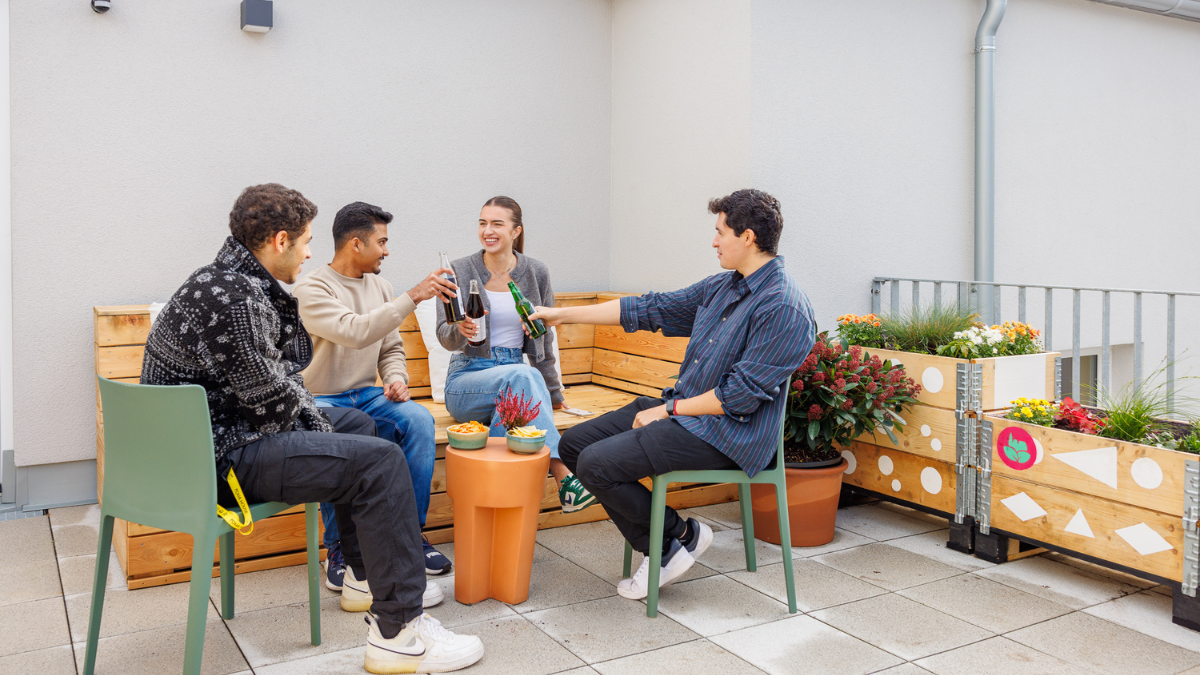 Starting a new life in a completely different place is not only tiring physically and emotionally, but also has an impact on your so-called “social battery”.
Questioning whether someone likes you, worrying about others’ reactions, trying to get approval, attention, or agreement from others, these all can be thoughts that people experience when being in a new social setting that can, as a consequence, change how open you feel towards others.
Besides the feeling of wanting to be integrated, feeling isolated can also become one of the social battery drainers, getting too much alone time can make you comfortable and unconsciously push you towards not wanting to create any social bonds. So, what’s the best course of action in these cases? Focusing less on others, and more on managing your actions. Realising how you are feeling and taking control of the social interactions you are having, taking conscious decisions and slowly easing into interacting with your surroundings.
Are you a peach or a coconut?
 No, we are not talking about fruits! These are terms to divide countries into two categories, very common when helping expats have a better understanding of people from different cultural backgrounds so that they can prevent misunderstandings and enjoy a better working and social relationship with them.
A Peach type of culture/person are the ones who are easy to talk to, friendly and open to start conversations, often jumping to questions that might feel personal. A “thin skin” makes it more comfortable and easy for an outsider to enter their life as a friend. They tend to keep their friends or acquaintances as separate segments of their life and the “hard core” of the peach would be their most inner circle, whether family or friends, that are really considered their closest people that is not as easy to access.
Coconuts are “hard on the outside”, the type that won’t commonly smile to a stranger on the street or share personal information with someone other than their close friends or family, however, once you get past the hard surface, they will consider you as family. To break through the surface, trust must be earned but once you are in, they are very loyal and caring towards their friends.
So in a world of Peach countries such as the USA, Brazil, Mexico and Italy and Coconut countries like Germany, Russia, France and Switzerland, knowing where you land and how you handle friendships becomes key in how we approach social connections when moving to a new place.
So after all this, what’s the best place to start?
Strengthen your social muscle with Micro-friendships. 
Having a close friend is a core social type of interaction, and while a long lasting ‘best friend’ is what all of us aim to have, ‘weaker’ or ‘smaller’ social connections can be a great place to start when moving to a new place and believe me, these connections are more valuable than most people could imagine, for some, they are even life-changing!
Micro-friendships, also known as micro-connections, are defined by Psychology today as “brief, casual, and random social interactions with strangers or acquaintances”. Have you ever felt uplifted after getting a smile and a good morning from a neighbour? Or a happy feeling after striking up a nice conversation with a stranger on the street? Those interactions, no matter how small, have proven to be a key factor for people to feel more socially integrated in a community.
How do these work?
Having a small conversation, exchange or just any type of interaction with a stranger might sound tricky to some people, but being proactive is key for this.
Starting can be as simple as going on a walk around the same area at the same time every day, or joining events for the community, such as the community events in POHA House, in which you can start seeing familiar faces which will make it easier to start a short conversation and to find people with shared interests without having to dedicate hours getting to know a person.
The goal is to slowly open the doors to getting to know people around you and immersing yourself in the community you have now become part of.
The “third place strategy”. 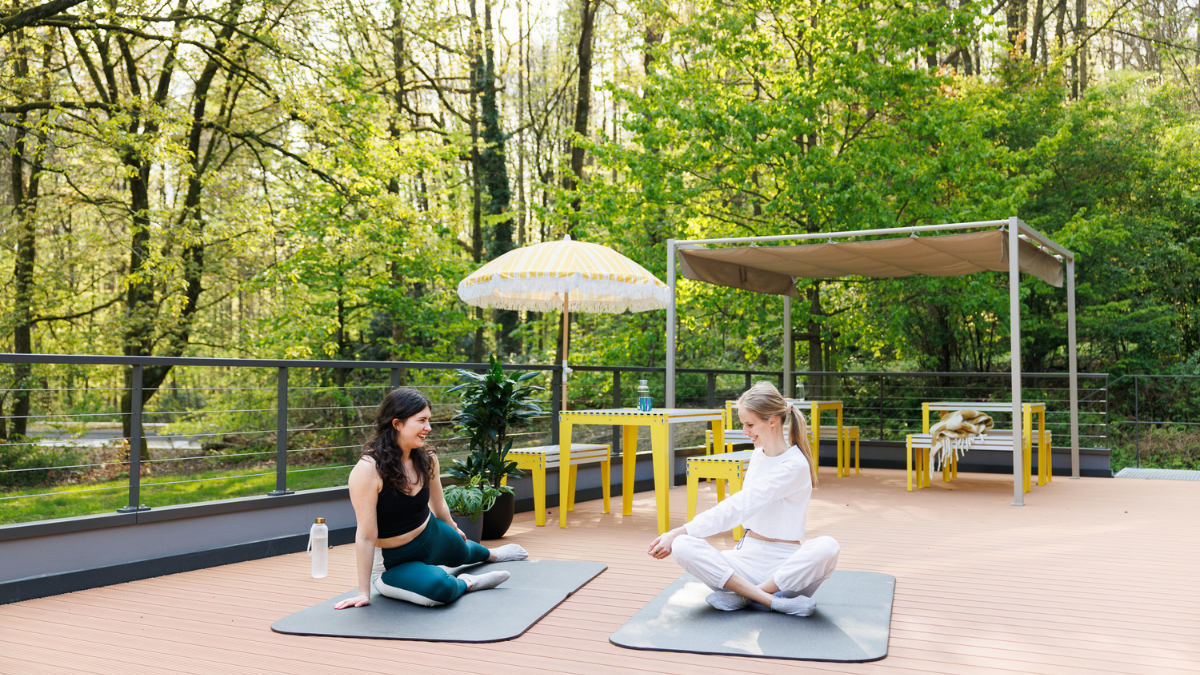
Some sociologists consider that, in order for us to succeed in social aspects, a “third-place” is needed. This third place is somewhere where community and social interactions are encouraged or at least facilitated, separate from your first place, home, and your second place, work.
These spaces that foster community, are the ones looking to create safe spaces for the community to be integrated, whether is having a coffee, a cooking class, doing sports activities together, art or any other offer that can encourage people to have conversations and know each other, that is a great place to practice your micro-connections techniques!
Constantly showing up and creating a routine including a third place where you can constantly be exposed to your community, is the perfect place to begin your journey of getting immersed in your new surroundings and slowly getting to know people even if it’s just for a short exchange.
Can these micro-connections turn into long lasting friendships?
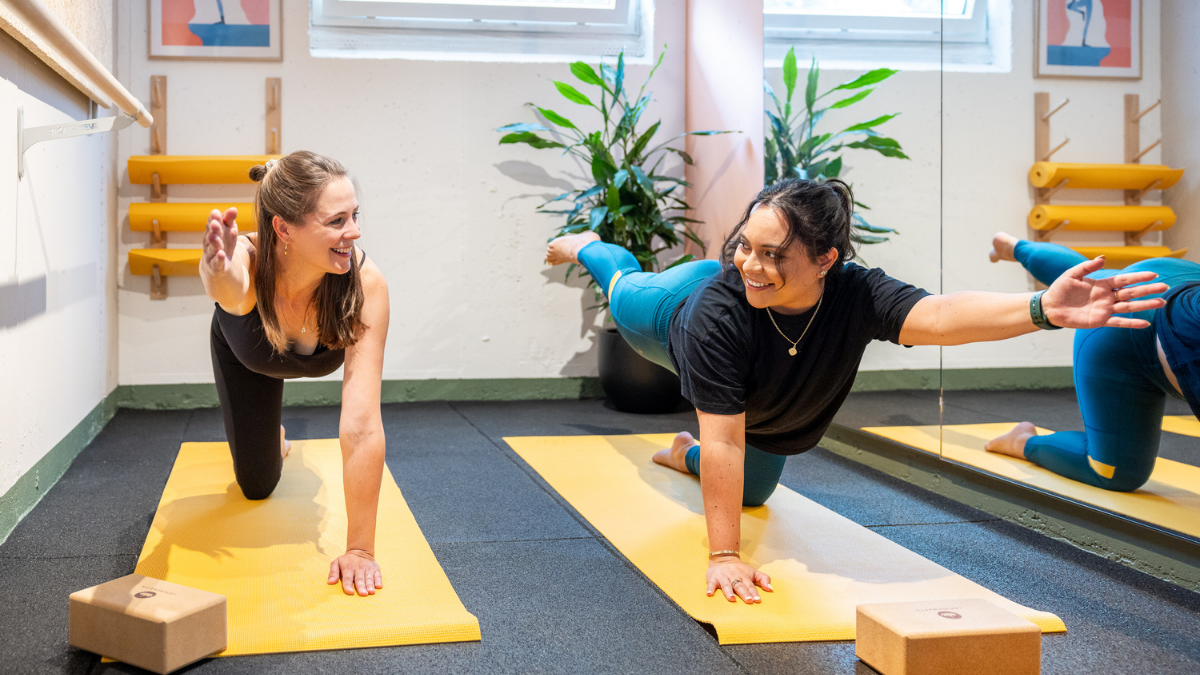 The answer is yes! Don’t be afraid to ask questions, be curious and approach people who might have the same interests as you.
In our community at POHA House, for example, joining the community events or just hanging in the community spaces like the gym, lounges, kitchens, can already lead you to meet some like-minded people who might just become your new best friends.
Our top piece of advice? Be proactive. Even glancing a smile to a stranger can lead to a deeper relationship that will help navigate the adventures of this new beginning in a more fun and lighthearted way.